
Strength training over 40 works, and it doesn’t take much to get going. Two full-body sessions a week, built around five basic movements, done with good form and a weight that leaves a couple of reps in the tank, is enough to start building muscle again at 45 or 55. Your age isn’t the hard part. Starting at the right level and staying there long enough to see it work is.
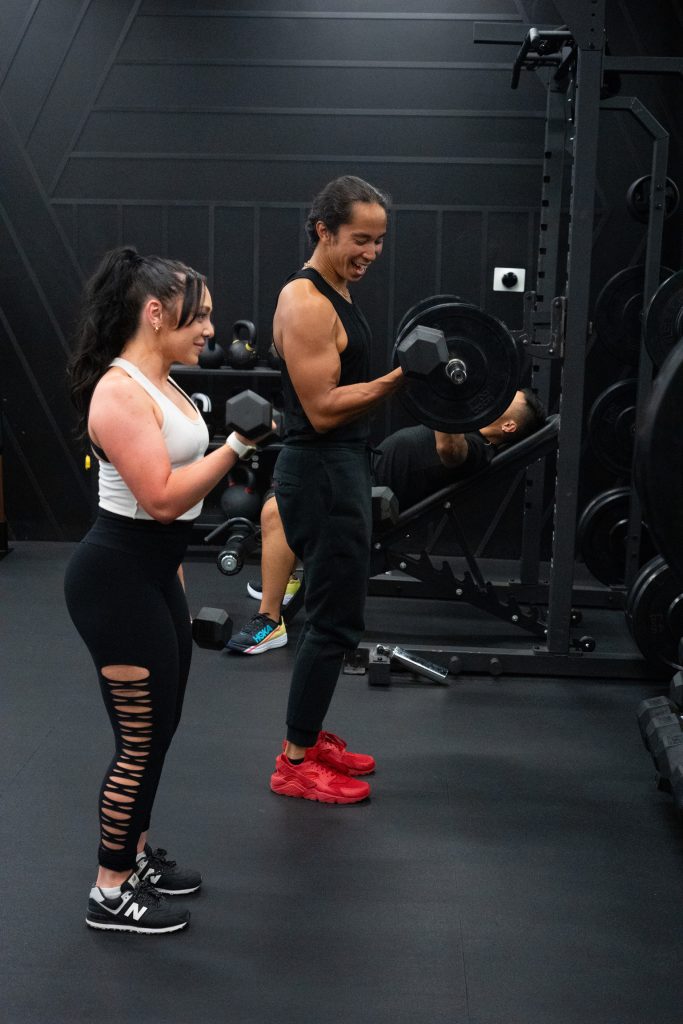
I’ve been coaching for over 15 years, and a big share of the people who walk into Fitness Covered on Sunset are in their 40s and 50s. Most of them aren’t starting from zero. They lifted in college, or did a bootcamp for a few months a while back, and they come in expecting to pick up where they left off. That’s usually where things go sideways.
Strength training over 40: what actually changes
Your muscles still respond to lifting. That part never goes away. What changes is that muscle quietly slips away if you don’t use it. Harvard Health puts that decline at about 3 to 5 percent per decade starting around age 30, which is why so many people feel weaker at 45 without being able to say why.
Recovery also takes a little longer, and old injuries have had more years to speak up. The shoulder you tweaked at 28 has opinions now. None of that means you should train soft. It means you warm up properly, follow a plan, and push hard on the right days instead of every day.
As for how often, the CDC recommends strength work on two or more days each week, covering all the major muscle groups. If you want help landing on your exact number, I broke that down in how many personal training sessions per week you actually need.
The five movements I start everyone on
I don’t use special “over 40” exercises. I use the same basic patterns everyone needs, scaled to where you are today. Here’s what a first workout usually looks like for someone coming back after years off:
- Squat: goblet squat to a box, 2 sets of 8 to 10. The box tells you how deep to go and takes the fear out of it.
- Hinge: dumbbell Romanian deadlift, 2 sets of 8 to 10. Learning to bend from the hips is one of the best things you can do for your lower back.
- Push: incline push-up on a bench or bar, 2 sets of 6 to 10. Lower the incline as you get stronger.
- Pull: cable or dumbbell row, 2 sets of 10 to 12. Long days at a desk pull your shoulders forward. Rows pull them back.
- Carry: farmer’s carry with a dumbbell in each hand, 2 rounds of 30 to 40 steps. Grip, core and posture in one move.
With a warm-up, that’s about 35 to 40 minutes. Pick a weight where you could do two or three more reps at the end of each set. If you’re fighting for the last rep, it’s too heavy for now.
How to progress without getting hurt
For the first two weeks, keep the weights the same and just own the movements. In week three, add a third set. In week four, start adding a little weight to any exercise where every rep looked and felt clean. Keep the jumps small. Five pounds on a goblet squat is a real step forward.
The rule I give clients: the weight goes up when your form earns it, not when your ego asks for it. That’s the whole idea behind the Momentum Method we use here. Start with small, manageable chunks you can actually win, and let those wins stack.
Soreness is normal. Joint pain is not. If a knee or shoulder hurts during a lift, that’s a signal to change the exercise, not to push through it. There’s almost always a version of a movement that works for your body.
The mistakes I see most from people over 40
Lifting the number you remember. Someone who benched 225 in college wants 225 on day one. Your tendons haven’t heard about that number in twenty years. Start lighter than you think you need to and let it climb.
Skipping legs because of the knees. In my experience this one usually works backwards. For a lot of people, stronger legs make cranky knees feel better, as long as the depth and load fit them. Part of my job is finding that version.
Doing only cardio. Plenty of people try to fix a changing body with more running or more spin classes. Cardio is great for your heart, but it doesn’t give your muscles much reason to stick around. Lifting does.
Worrying about getting bulky. I hear this a lot in Hollywood, where many of our clients care a lot about how they look. Two sessions a week with moderate weights tends to make people look leaner and more put together, not bigger. Building real size takes years of eating and training for it on purpose.
What this looked like for one client
Chris is a real estate broker who came to us at 50, after a heart attack. He was nervous about lifting anything at all. We started with a basic program a lot like the one above, kept his doctor in the loop, and built up slowly. Over the next year he lost 30 pounds, and working with his doctor, he eventually came off the medication he’d been put on after the heart attack.
That’s Chris’s story, not a promise. But it shows what steady strength training over 40 can be part of. If you have a heart condition, diabetes or any other health issue, talk to your doctor before you start, and tell your coach what they said.
Frequently asked questions
Is it too late to start strength training at 50?
No. Muscle responds to training at any age, and plenty of people in their 50s and 60s build real strength when they train consistently. The starting point just matters more: lighter weights, more time on form, and a slower ramp through the first month.
Should I lift weights or do cardio after 40?
Both, but most people over 40 are short on the lifting. Federal activity guidelines recommend both aerobic exercise and strength work every week. If you only have time for one thing right now, two strength sessions plus daily walking covers a lot of ground.
Can I strength train on my own, or do I need a trainer?
You can train on your own with a simple plan like the one above. A coach pays off when it comes to form, knowing when to add weight, and working around old injuries. At Fitness Covered, 1:1 personal training includes gym access and a program for your solo days, so you get both.
If you’re over 40 and it’s been a while, your intro is where we sit down, go over your history and any old injuries, and map out your first month of lifting. Book Your Intro at fitnesscovered.com.

